Blog · Inventories
What a check-in report must prove
Most reports describe a property. Very few prove anything about it. The difference only shows up months later, in front of an adjudicator who was never there.
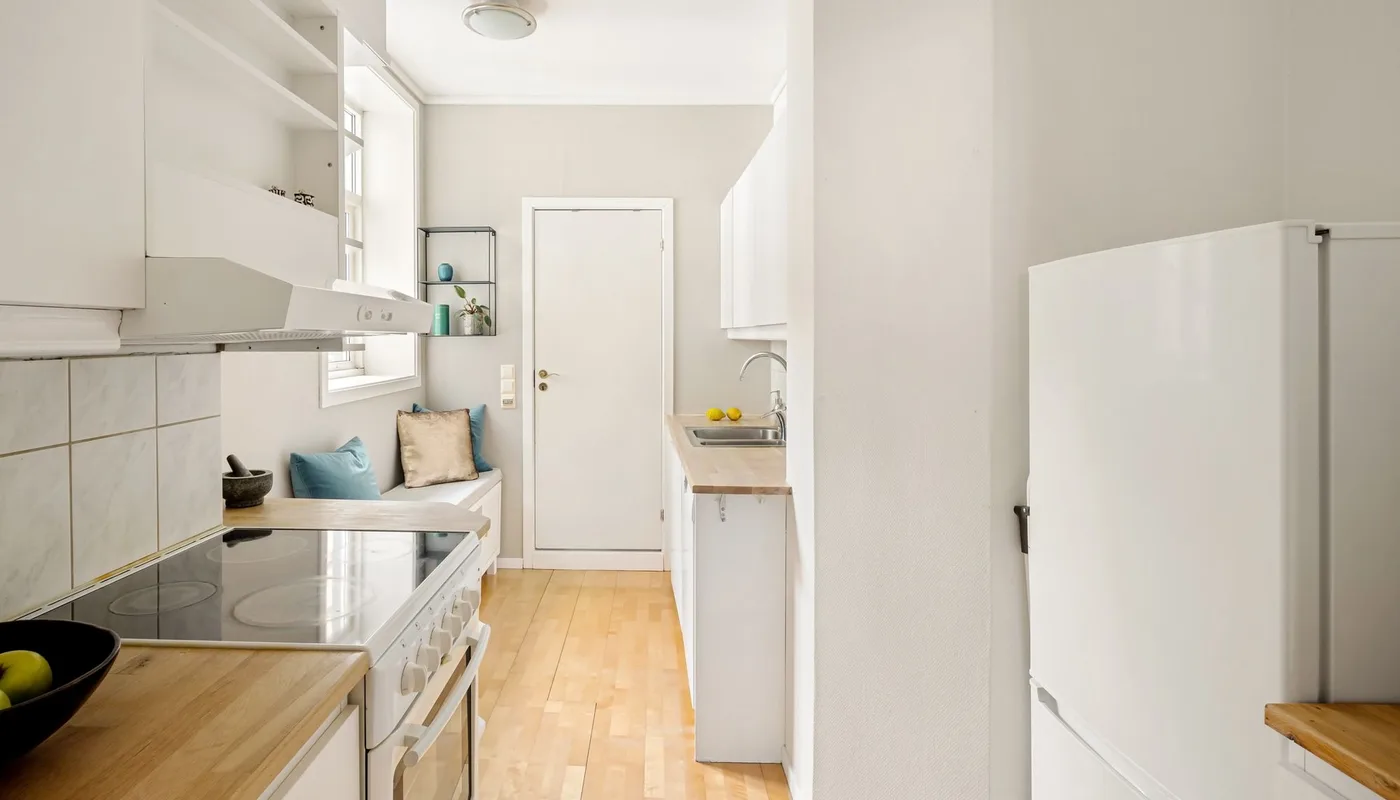
A check-in report is not a description of a property. It is a piece of evidence written months before anyone knows it will be needed, for a reader who will never see the flat. That reader is an adjudicator, they will decide on the papers alone, and they will start from the position that the deposit belongs to the tenant unless somebody proves otherwise.
That last point is the one most reports are written as though it were not true. The burden of proof sits with whoever claims a deduction. A report that says "kitchen: good condition" has proved nothing at all, and has quietly handed the argument to the other side.
What a check-in report is actually for
There are around 4.7 million deposits protected in England and Wales. Almost all of them are returned without an argument. The ones that are not turn on a single question: can you show what the property looked like on the day the keys changed hands, and can you show it in a form somebody else can check?
That means three things working together. A written description precise enough to be tested. Photographs that carry a date. And a record that the tenant saw the document and had the chance to disagree with it.
Miss the third and the first two lose most of their weight. An unsigned report is one party's account of the property. A report the tenant received, had a window to comment on, and did not challenge is something much closer to an agreed fact.
Cleaning is the argument you are going to have
Cleaning is the single biggest cause of deposit disputes in the country. The Tenancy Deposit Scheme's own adjudication data puts it in roughly half of all cases, ahead of damage, ahead of redecoration, ahead of rent arrears.
That is worth sitting with, because cleaning is also the easiest thing in the world to record properly and the thing reports are laziest about. "Clean throughout" is not evidence. It is an opinion, offered by an interested party, about a standard nobody defined.
The fix is unglamorous. Photograph the oven interior, the grill pan, the extractor filter, the fridge seals, the shower screen, the toilet behind the pan, the window tracks. Say what state each one is in, in words a stranger can picture. Do it at check-in, not only at check-out, because a deduction for cleaning depends entirely on being able to show the standard the tenant received.
The four things most reports leave out
- Meter readings with the serial numbers, photographed. A reading typed into a form is a claim. A photograph of the meter showing the reading and the serial is a fact.
- Measurements on anything damaged. A 40mm scuff to the left of the hob is a different animal from "scuffing to the kitchen wall". Numbers survive cross-examination, adjectives do not.
- The things that are not there. Missing keys, a missing grill pan, a blind with no wand. Absences are invisible at check-out unless somebody wrote them down at check-in.
- Age, where it can be seen. Fair wear and tear has to be allowed for, and an adjudicator can only allow for it if the report tells them the carpet was already worn at the threshold when the tenancy started.
What good looks like on the day
A proper check-in takes longer than people expect, and the time goes almost entirely on photography rather than writing. Every room, every elevation, then the detail shots that will matter later. Timestamps intact. Nothing cropped, nothing enhanced, nothing tidied before the shutter.
Then the report gets sent to the tenant with a stated period to respond, and whatever they say goes in. A tenant who disagrees with three lines and signs the rest has made the other several hundred lines considerably stronger.
None of this is complicated. It is simply slower than the way most inventories are produced, and it is the difference between a document that settles an argument and a document that starts one.
The test for any line in the report is simple. Could somebody who was never in the room reach the same conclusion from what you wrote and photographed? If not, it is not evidence yet.
Since 1 May 2026 no tenancy runs to a fixed end date, which changes when that second visit falls due: see check-out reports now that no tenancy ends on a fixed date.
Emilecon writes check-in, check-out and interim inventories across Greater London, independently of the landlord and the agent, on the basis that the report will one day be read by somebody looking for a reason to disagree with it.
Sources: Tenancy Deposit Scheme adjudication data reported by the National Residential Landlords Association. This article is general information about how deposit adjudication works and is not legal advice.
Need this done on a real property?
Emilecon writes independent inventories and scans 3D tours across Greater London. Available Monday to Saturday, last minute bookings taken, and the report delivered within 3 hours of the visit.
Book inspection